
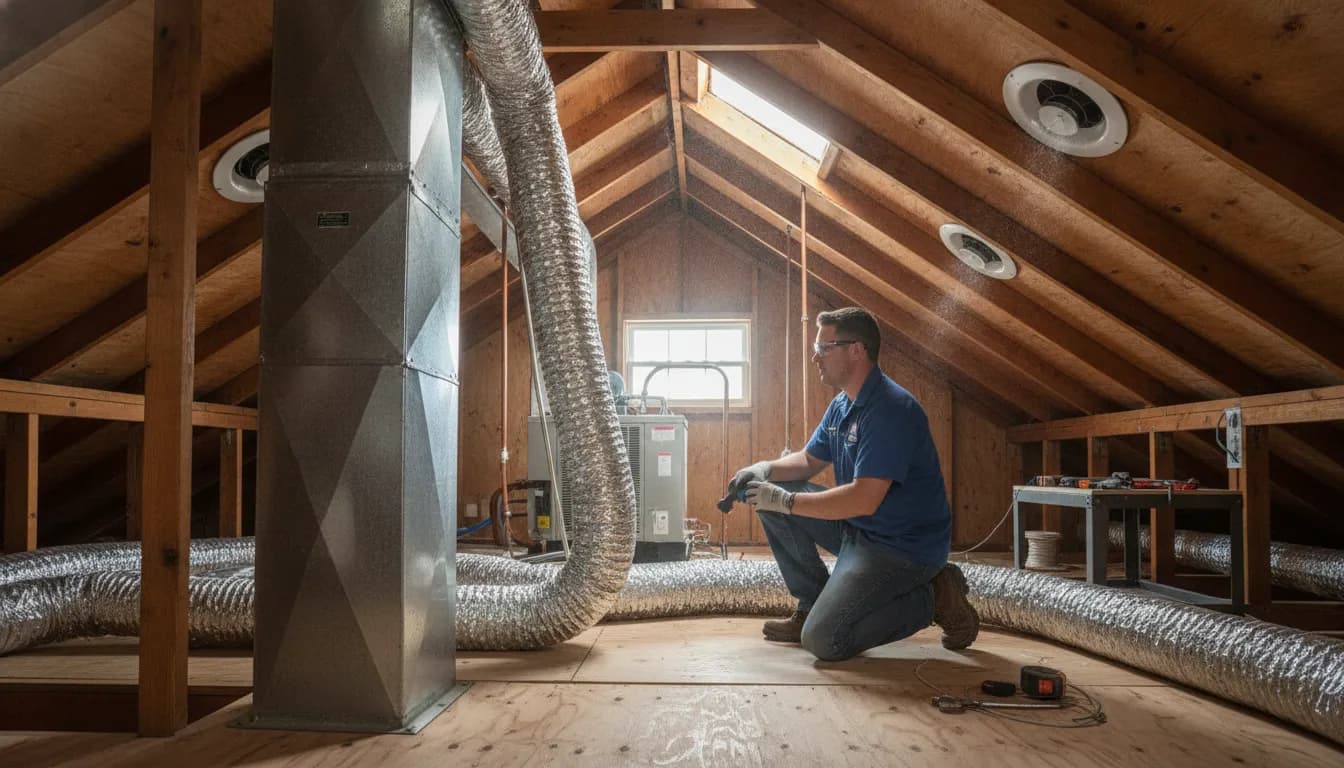
Uneven temperatures, weak airflow, or an air conditioner that runs longer than expected can point to ductwork problems, not just an aging AC unit. In Brevard County, Florida's heat and humidity make sealed, properly insulated ducts especially important for comfort and moisture control.
The ductwork repair cost florida homeowners should expect depends on the location and size of the leak, access, insulation, duct material, and whether the system is damaged or undersized. Small leaks in accessible areas may be repairable with mastic or metal tape. Severe damage or major leaks may make replacement more practical. A professional should confirm the scope before recommending either option. The EPA also advises considering system condition when deciding whether repair or replacement is appropriate.
A professional evaluation can separate a repairable sealing issue from a larger airflow or layout problem. For broader planning, see the Florida HVAC cost guide. Space Coast Cooling & Plumbing serves homeowners throughout Cocoa, Melbourne, Palm Bay, Titusville, Merritt Island, Rockledge, and nearby communities.
Request a Brevard County ductwork evaluation
Start by looking at the symptoms in your home. Then consider the clues that help determine whether a focused repair or broader replacement deserves closer consideration.
How Do You Know if Your Ductwork Needs Repair or Replacement?
Duct problems often show up as comfort issues before they become obvious damage. A bedroom may stay warm while the rest of the house feels comfortable. You may notice weak airflow from one register, whistling around vents, unusually dusty rooms, or an AC system that runs longer than it used to. In Florida, uneven comfort can also be tied to duct leaks that allow conditioned air to escape into an attic, crawl space, or wall cavity.
These symptoms do not automatically mean the entire duct system needs to be replaced. The right choice depends on where the problem is, how extensive the damage is, and whether the existing layout and insulation can still serve the home effectively. A professional inspection is the safest way to separate a repairable leak from a system-wide problem. If your AC is running but not cooling the house, compare the symptoms before assuming the ducts are the only cause.
Signs a duct repair may be enough
Repair is often appropriate when the damage is limited and accessible. For example, a technician may find a loose connection, a small tear in flexible ductwork, a separated joint, or a short section with damaged insulation. Small leaks in accessible areas may be repairable with an appropriate duct sealant or approved metal tape. The repair should address the leak itself rather than simply covering visible damage with ordinary cloth duct tape, which is not a durable substitute for proper duct materials.
- Only one or two rooms have noticeably weak airflow.
- The duct material is generally intact, with isolated gaps or loose connections.
- The system is correctly sized and routed for the home.
- Insulation damage is limited to a small, repairable area.
After a repair, airflow should be reassessed. If comfort improves and the remaining ductwork is sound, targeted work may be more practical than disturbing the entire system.
Signs replacement may be the better option
Replacement deserves closer consideration when damage is widespread or the duct design has been a recurring source of problems. Crushed or collapsed flexible ducts, extensive tears, disconnected runs, severe insulation deterioration, and major leaks can all point toward more comprehensive work. Severely damaged duct systems or systems with major leaks may be more practical to replace than to repair.
Replacement may also be appropriate when ducts are consistently undersized, poorly routed, or inaccessible for effective repair. In those cases, sealing one visible opening may leave the underlying airflow problem unresolved. Persistent hot or cold rooms, excessive attic moisture concerns, and repeated repair visits are reasons to ask for a full ductwork and airflow evaluation. Florida's humidity makes sealed, properly insulated ductwork especially important because damaged or leaky sections can allow unwanted moisture into areas where it may contribute to indoor air quality concerns.
Ask the technician to explain which sections are damaged, which can remain, and how the recommendation affects airflow, insulation, access, and long-term maintenance. A clear explanation helps you compare a targeted repair with replacement based on the condition of your home, not on a one-size-fits-all rule.
What Does Ductwork Repair Cost in Florida?
There is no reliable single price for ductwork repair in Florida because the work can range from sealing one accessible connection to rebuilding a large portion of the distribution system. A transparent estimate should reflect the actual condition of the ducts. How easily the affected area can be reached, and whether the repair will remain durable in Florida's heat and humidity. It should not be treated as a generic statewide quote.
What goes into a ductwork repair estimate?
The first cost factor is the scope of the damage. A small tear, loose joint, or disconnected section may be repairable with appropriate duct sealant or metal tape when the area is accessible. This targeted approach can be practical for small leaks in accessible areas.
Larger or harder-to-reach problems require more labor. Ducts may run through attics, tight crawl spaces, soffits, or behind finished areas. Access can affect the time needed to locate the leak, protect the home, remove damaged insulation, and complete the repair without creating new gaps. The estimate may also account for the length of duct involved, the type of material, the number of connections, and whether insulation is wet, compressed, contaminated, or missing.
- Repair scope: One joint or short section generally requires a different approach than widespread deterioration or multiple disconnected runs.
- Access: Tight, elevated, or concealed duct locations can increase labor and may require additional preparation.
- Materials: Flexible duct, rigid metal, insulation, supports, sealants, and replacement fittings each have different installation requirements.
- Humidity and insulation: In Florida, damaged or poorly sealed ductwork can contribute to moisture problems. The repair should address the cause, not just cover a visible gap.
- System design: Undersized, severely damaged, or repeatedly failing ducts may need a replacement recommendation rather than another patch.
When replacement may be more practical
A low-cost patch is not always the least expensive long-term choice. Severely damaged, undersized, or majorly leaking duct systems may be more practical to replace than repair. A professional inspection can confirm whether that applies to your home.
An inspection helps separate a limited repair from a broader system problem. A technician should identify where air is escaping, assess insulation and connections, and evaluate airflow at the registers before recommending work. Sealing and insulating ducts can improve HVAC efficiency by as much as 20 percent in some situations. According to the DOE, but that is a potential result, not a guaranteed reduction in a particular home's electric bill. For homeowners in Cocoa, Melbourne, Palm Bay, Titusville, Merritt Island, and nearby communities. The most useful cost comparison is a documented repair estimate versus the cost and expected benefit of replacement.
Flexible vs. Rigid Ductwork: Which Is Better for Florida Homes?
Neither flexible nor rigid ductwork is automatically the right choice for every Florida home. The better option depends on the layout, available access, insulation condition, existing damage, and how carefully the system is sized and installed. A well-sealed system with appropriate insulation can support more consistent airflow and comfort, while poorly installed ductwork can create problems regardless of its material.
| Factor. | Flexible ductwork. | Rigid ductwork. |
|---|---|---|
| Best use. | Short, carefully routed connections and areas with limited access. | Longer, structured runs where a stable path is practical. |
| Installation concern. | Must remain fully extended and supported to avoid sagging and airflow restriction. | Joints must be properly connected, sealed, and supported. |
| Access. | Can be easier to route around obstacles, but repairs may be difficult in tight spaces. | May require more planning and working space during installation or replacement. |
| Insulation. | Often includes an insulated outer jacket that must stay intact and dry. | Usually needs properly fitted insulation to limit heat gain in unconditioned areas. |
Installation quality matters more than the label
Flexible duct can lose performance when it is sharply bent, compressed, loosely supported, or left with excess length. Those conditions can restrict airflow and increase the strain on the air-conditioning system. Rigid ductwork provides a more defined path, but its seams, connections, and transitions still need careful sealing. A rigid system with open joints is not automatically better than a properly installed flexible system.
Small leaks in accessible areas may be repairable with appropriate mastic sealant or metal tape. If the system has severe damage, major leaks, or other fundamental problems, replacement may be more practical than repeated repairs.
Florida humidity changes the decision
In Brevard County, ductwork runs through a hot, humid environment for much of the year. Damaged insulation or unsealed joints can allow unwanted heat and moisture into the system. That can contribute to uncomfortable rooms and moisture concerns, especially when ducts pass through attics or other unconditioned spaces. The duct material matters, but sealing, insulation, support, and access for future service matter just as much. A professional evaluation can identify whether repairing the existing ductwork or replacing a section will provide the more dependable result.
How Leaky Ductwork Affects AC Efficiency and Your Electric Bill
Leaky ductwork can make your air conditioner work harder without making your home more comfortable. Conditioned air may escape through loose connections, torn flexible duct, damaged insulation, or gaps around registers before it reaches the rooms that need it. The result can be longer cooling cycles, uneven temperatures, and an electric bill that seems out of proportion to your thermostat setting.
Leaks can also pull hot, humid air into the return side of the system. In Brevard County, that added moisture matters. A system may run longer while still leaving rooms clammy, and damaged or unsealed ducts can contribute to moisture concerns inside an attic or crawlspace. Keeping the duct system sealed is especially important in Florida's humid climate. Sealed ductwork can support better moisture control and indoor comfort in Florida homes.
Why a duct leak can raise cooling costs
Your AC is designed to move a specific amount of air through the supply and return ducts. When air escapes before reaching a room, the thermostat may not satisfy as quickly. The equipment continues operating, using electricity while the home remains unevenly cooled. You may notice a bedroom that stays warm, weak airflow from one vent, or a room that feels more humid than the rest of the house.
A return-side leak creates a different problem. Instead of drawing mostly cooled indoor air, the system can pull in warmer attic or outside air. The AC then has to remove additional heat and moisture. This added workload may be more noticeable during long, hot Space Coast afternoons, particularly when filters, coils, or airflow are already in less-than-ideal condition.
Sealing and insulating ducts may improve heating and cooling system efficiency in some homes. That is a potential improvement, not a guaranteed reduction in your electric bill. Actual results depend on leak size and location, duct insulation, equipment condition, thermostat settings, home construction, and other energy uses.
A professional evaluation can separate duct problems from other causes, such as an aging air conditioner, restricted airflow, poor insulation, or an incorrectly sized system. Small, accessible leaks may be repairable with appropriate sealant or metal tape. If ducts are severely damaged or have major leaks, replacement may be more practical than repeated repairs. In either case, the goal is dependable airflow, better humidity control, and an AC system that is not wasting energy trying to overcome avoidable duct losses.
When Should You Seal Ducts Instead of Replacing Them?
Age alone should not decide what happens to your ductwork. A 20-year-old system does not automatically need replacement. The better choice depends on the condition of the ducts, how accessible the damage is. Whether the layout still fits the home, and how well the system delivers conditioned air. Use this framework as a starting point, then have a qualified technician inspect the ductwork before approving a large project.
Start with the location and size of the problem
Small leaks in accessible sections are often good candidates for sealing. Appropriate duct sealant, such as mastic, or approved metal tape can address limited gaps when the surrounding material is still sound. The U.S. Department of Energy describes small, accessible leaks as repairable in many cases. Sealing is less straightforward when leaks are hidden behind finished walls, spread across multiple branches, or paired with damaged insulation.
Check whether the duct material is structurally sound
Repair is more reasonable when the duct jacket, connections, insulation, and supports are intact. Replacement deserves closer consideration when ducts are crushed, torn, disconnected, contaminated by moisture, or repeatedly failing in the same locations. In Florida, persistent humidity makes moisture-related damage especially important to investigate. A repair that closes one opening but leaves wet or deteriorated material in place may not solve the underlying problem.
Ask whether the system design still works for the home
Even well-sealed ducts can perform poorly if they are undersized, badly routed, or unable to deliver balanced airflow. Major leaks, severe damage, or an undersized or disconnected duct system may make replacement more practical than repeated repairs, according to the EPA's indoor-air-quality guidance. This is also where broader Brevard County AC repair services can help identify whether the comfort issue is truly in the ductwork or elsewhere in the system.
Compare the long-term result, not just the first invoice
Sealing and insulating ducts can improve HVAC efficiency by as much as 20 percent. According to the Department of Energy, but that figure is a potential result rather than a promise for every home. A targeted repair may be the sensible choice when it restores airflow and stops leakage. Replacement may offer better value when repairs would be extensive, access is difficult, or the existing design continues to create comfort and humidity problems.
Get an inspection before choosing
Request a clear explanation of what was found, which sections can be sealed, what would be replaced, and why. Ask whether insulation, supports, connections, and airflow were evaluated, not just visible gaps. A professional assessment helps separate a manageable repair from a replacement project and prevents a 20-year-old label from becoming an automatic recommendation.
For homeowners comparing ductwork repair cost Florida options, the most useful estimate is based on the actual access, materials, layout, and condition of the system. Those details matter more than age by itself. If the symptoms could also come from the equipment, a technician who provides Brevard County AC repair services can help separate a duct problem from an AC problem.
What a Brevard County Ductwork Evaluation Should Include
A useful evaluation should do more than point out an old section of ductwork. It should connect the condition of the system to the symptoms you notice at home, then explain which work is necessary now and which improvements can wait. That matters in Brevard County, where long cooling seasons, heat, and humidity can expose weak connections and damaged insulation quickly.
Ask the technician to walk you through the findings in plain language. A professional evaluation should typically cover the following areas.
Visible condition and accessible leaks
The inspection should look for crushed, disconnected, sagging, or visibly damaged duct sections, along with loose collars and failed connections. Accessible leaks may be repairable with an appropriate duct sealant or metal tape, rather than requiring a full replacement. Small leaks in accessible areas may be repairable with an appropriate duct sealant or metal tape.
Insulation, airflow, and comfort symptoms
Insulation deserves specific attention, especially in an attic or another hot, humid area. Missing or deteriorated insulation can allow condensation and energy loss even when the duct itself is still intact. The technician should also consider airflow at the registers and returns, uneven temperatures between rooms. Weak airflow, excessive dust, and rooms that never seem to reach the thermostat setting. These observations help distinguish a duct issue from a problem with the air conditioner, filter, return path, or controls.
Testing should support the visual inspection when practical. The technician may examine accessible connections, compare airflow complaints with the duct layout, and check whether the system is properly sized and configured. Sealing and insulating ducts may improve HVAC efficiency in some situations. That is not a guarantee for every home.
Repair or replacement recommendation
Finally, the written or verbal recommendation should explain why repair, partial replacement, or a larger replacement is appropriate. Severe damage, major leaks, or an undersized or disconnected system may make replacement more practical than repeated repairs. The estimate should account for access, duct length, insulation, layout, materials, and any code-related work.
Space Coast Cooling & Plumbing has served the Space Coast since 1994, with licensed technicians who assess ductwork and airflow as part of system diagnostics. An honest evaluation should leave you with clear options, not pressure to choose the most expensive path.
Schedule a Brevard County ductwork evaluation with Space Coast Cooling & Plumbing
Frequently Asked Questions
How much does it cost to replace ductwork in a 2,000-square-foot house?
There is no dependable price based on square footage alone. An estimate also depends on duct length, layout, access, insulation, material, damage, and whether code-related changes are needed. A contractor should inspect the existing system and explain which sections require replacement instead of presenting a flat per-square-foot assumption.
Is it expensive to repair ductwork?
It can be relatively manageable when the problem is a small, accessible leak. Limited leaks may be repairable with an appropriate duct sealant or metal tape. Costs rise when leaks are widespread, ducts are difficult to reach, insulation is damaged, or several sections need work.
How long does ductwork last in Florida?
Ductwork does not have one guaranteed Florida lifespan. Its condition depends on installation quality, materials, insulation, moisture exposure, pest damage, and how well connections remain sealed. In Brevard County's hot, humid climate, have it evaluated when rooms develop uneven airflow, ducts show visible damage, or comfort and humidity problems persist.
Should I replace 20-year-old ductwork?
Not automatically. Age is one decision factor, but a professional should also check for major leaks, crushed or disconnected sections, poor sizing, contamination, and deteriorated insulation. Replacement may make more sense when damage is severe or leaks are major. Limited, accessible defects may be repairable. Compare repair and replacement based on the system's condition.
Ready to Make a Ductwork Decision?
Every home has different duct access, layout, insulation, and damage concerns, so an evaluation can help clarify whether targeted repairs or broader replacement makes sense. Space Coast Cooling & Plumbing can assess your system and explain the options in straightforward terms. Contact us to schedule a ductwork evaluation and get a practical repair-versus-replacement recommendation for your Brevard County home.